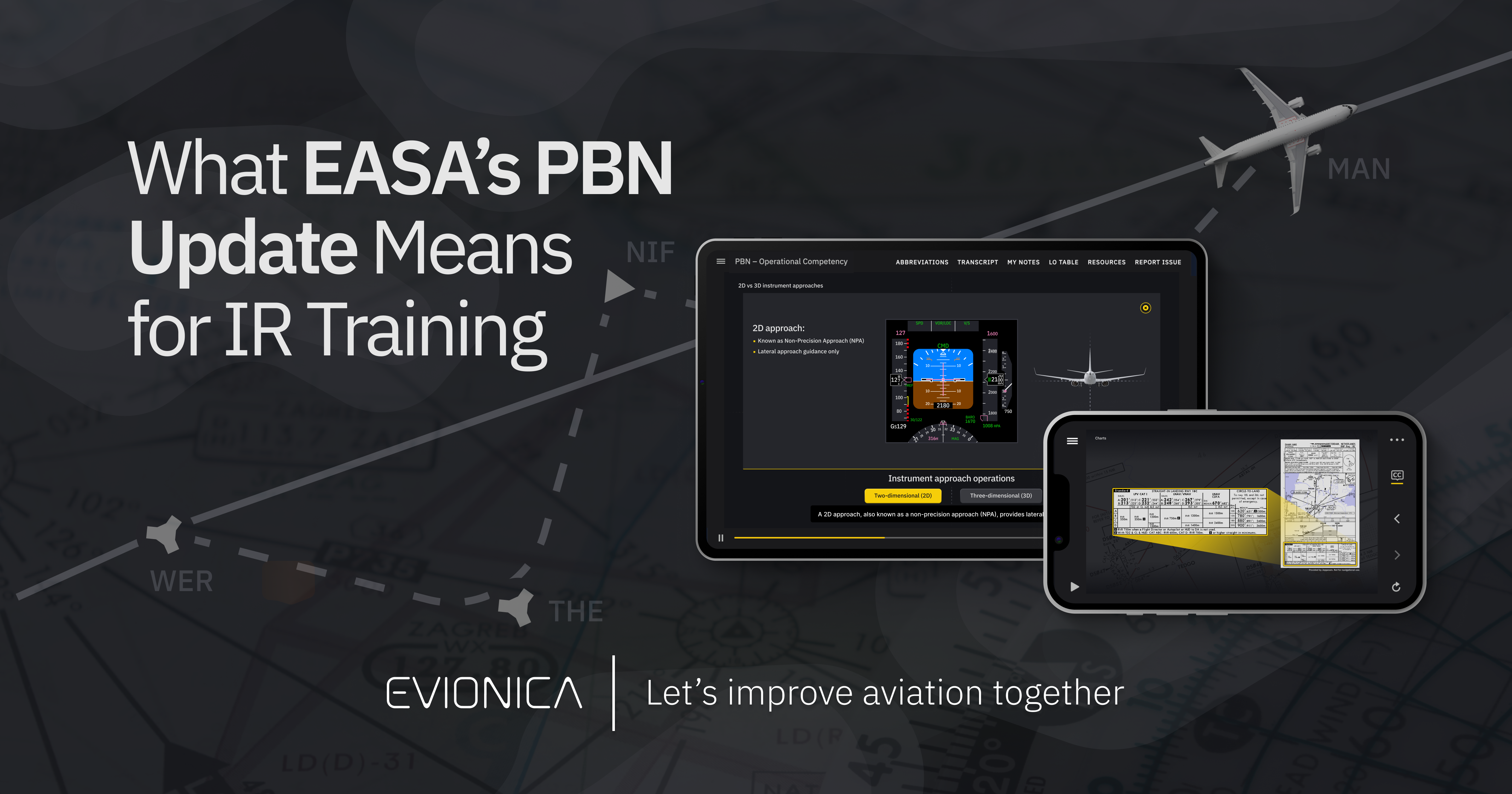
Performance‑Based Navigation (PBN) has been part of European instrument flying for many years. Today, it is a core operational capability, used daily across controlled airspace and reflected in the privileges attached to the Instrument Rating (IR).
What is new — and highly relevant for training organisations — is the level of clarity EASA now provides on what PBN training within an Instrument Rating course should include. This clarification is formalised in AMC1 FCL.615(a) Amendment 13, which introduces a dedicated Acceptable Means of Compliance describing PBN training elements and syllabus expectations for IR training courses.
For Approved Training Organisations delivering IR training — including modular and integrated pathways — the key question is therefore no longer whether PBN is covered, but whether current training clearly reflects these defined expectations across theory, ground‑based practical training, and flight or FSTD exercises.
What EASA Now Explicitly Expects...
So, what exactly does EASA now expect when it comes to PBN training within an Instrument Rating course? The short answer is clarity. The amended AMC goes beyond restating principles — it names specific theory elements that must be addressed within IR PBN training, giving clearer guidance for training organisations and for authorities responsible for oversight.

Since in accordance with point FCL.605(a) the privileges of an instrument rating (IR) include privileges to fly aircraft in PBN operations, the purpose of this AMC is to outline the training
elements on PBN operations which should be part of IR training courses in accordance with point FCL.615.
EASA
AMC1 FCL.615(a) (AMC & GM to Part-FCL, Issue 1, Amendment 13)
Examples of explicitly listed theoretical knowledge areas include:
- The distinction between RNAV and RNP, including associated performance factors such as accuracy, integrity, continuity, and functionality
- PBN navigation specifications, including examples requiring specific operational approval such as RNP AR and Point‑in‑Space operations
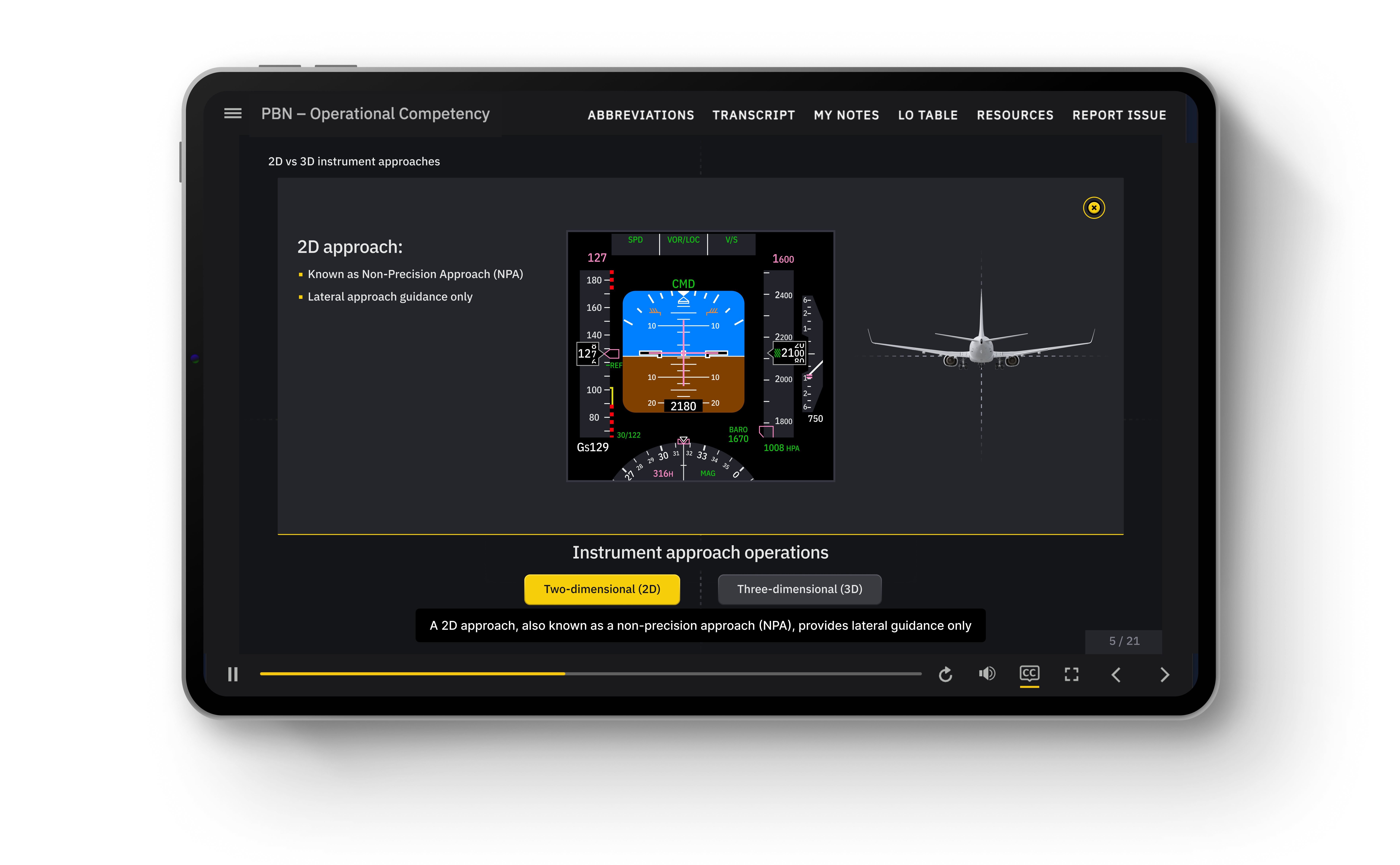
- 2D and 3D PBN concepts, including the use of linear and angular lateral guidance
- Vertical guidance limitations, addressing Aircraft Flight Manual constraints, temperature effects, QNH dependencies, and the critical importance of correct barometric altimeter setting
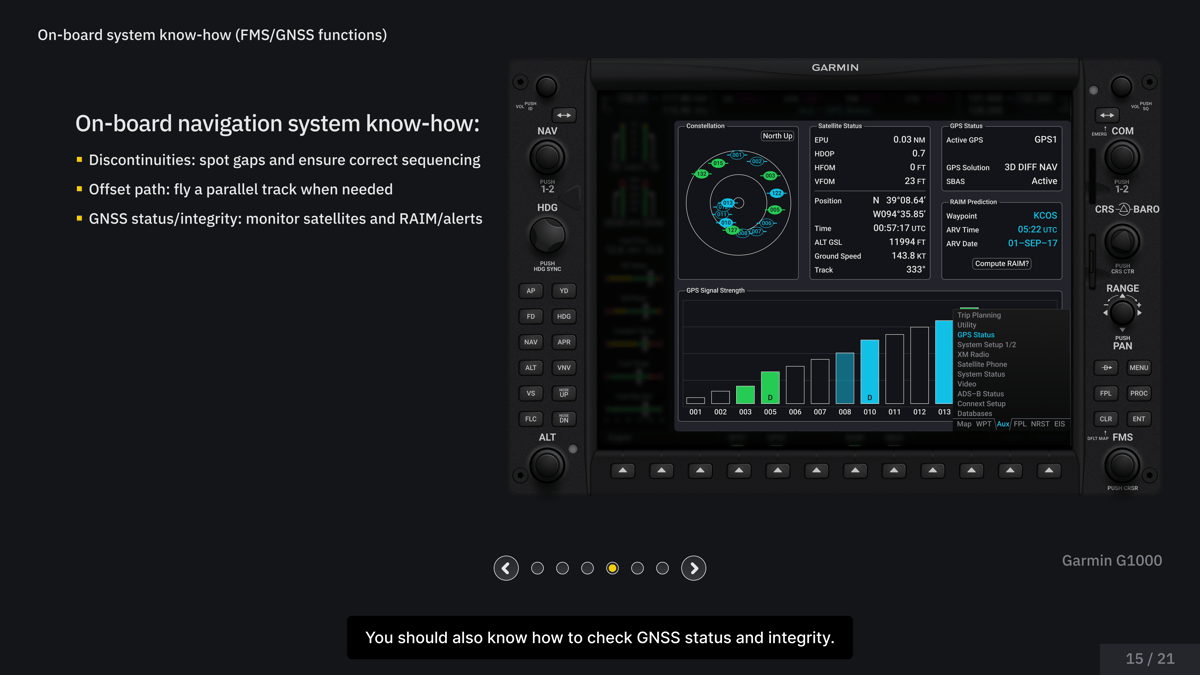
- RAIM and AAIM concepts, including their purpose, limitations, and operational relevance
The Compliance Perspective for ATOs
For training organisations, this clearer definition of PBN within the IR course has some very practical implications when it comes to compliance.
A structured and explicit approach to PBN training helps ATOs to:
- Ensure consistent coverage across courses and cohorts
- Reduce interpretation gaps between instructors
- Simplify compliance monitoring and syllabus maintenance
In short, it reduces uncertainty — for both training providers and regulators.
Looking Beyond Minimum Requirements
- Reduce exposure to future regulatory clarifications
- Minimise disruptive syllabus revisions
- Strengthen the link between theoretical knowledge and operational competence
Enhanced Learning Experience
- Clearer audio narration, using more natural‑sounding voices to support learners who benefit from auditory learning
- Improved on‑screen navigation, allowing easier movement between topics and quicker revisiting of key explanations
- Enhanced graphics and visual presentation to improve chart readability and operational interpretation
- Refined explanations written in more natural, learner‑friendly language to reduce cognitive load
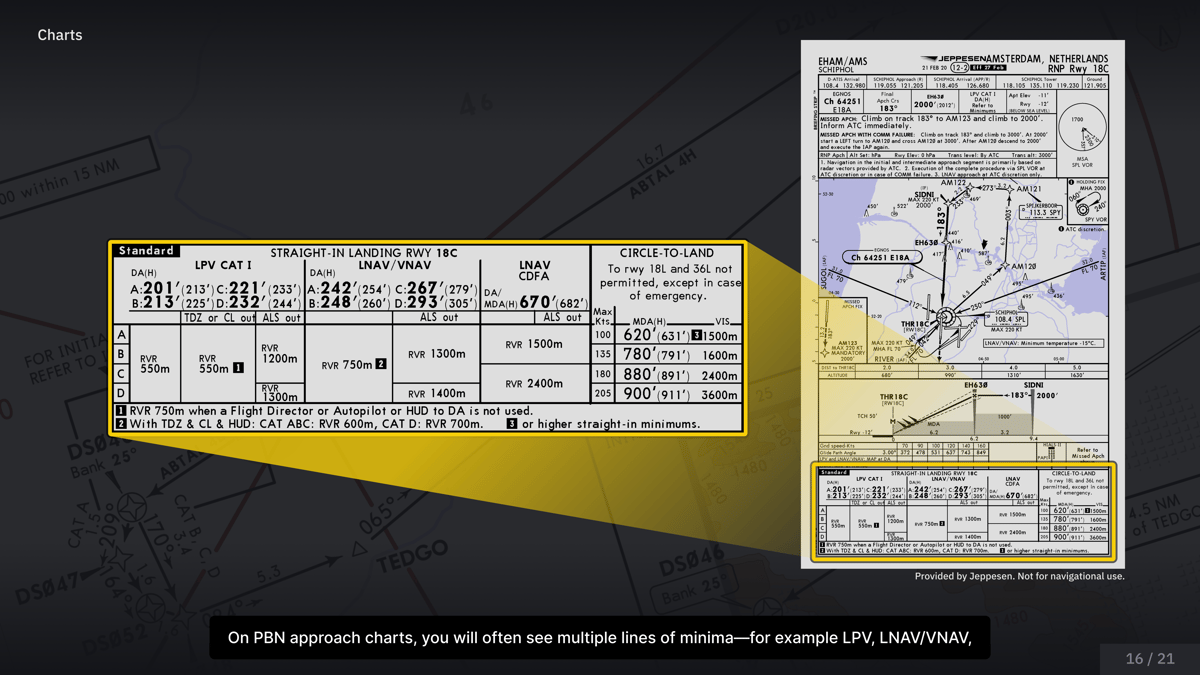
Drag the slider to compare a sample PBN screen from before the graphical enhancements with the newly enhanced PBN presentation.
By supporting both readers and listeners — and by improving clarity in presentation and structure — these enhancements allow learners to focus on applying PBN knowledge, rather than wrestling with the way the material is presented.
Training That Supports Confidence and Continuity


For everyone involved in pilot training, clarity matters: confidence that PBN is not only covered, but covered robustly, consistently, and in line with current EASA expectations.
That is the standard this PBN release is designed to support — helping ATOs meet AMC1 FCL.615(a)’s PBN training elements with clarity, consistency, and regulatory confidence, while keeping sight of how PBN is actually planned and flown in modern instrument operations.