

Flight training has always demanded precision, discipline, and time, but for many, that still means hours in a classroom surrounded by printed manuals, PowerPoint slides, paper-based tests, and a clock ticking slowly on the wall as learners gaze out at the aircraft waiting on the tarmac, eager to take flight, yet having to sift through hundreds of pages of schematics, unfamiliar graphs, and dense text first.
This rigid structure has created challenges for learners and instructors alike: limited flexibility, commuting costs, little room to adapt learning to personal schedules, extra facilities needed for training sessions, and limited personalization in teaching methods.
Today, the landscape is changing. Modern e-learning for pilot theory, both online and offline, offers a smarter alternative for distance learning flight training, bringing ground school to any location, on any device, without sacrificing quality or oversight.
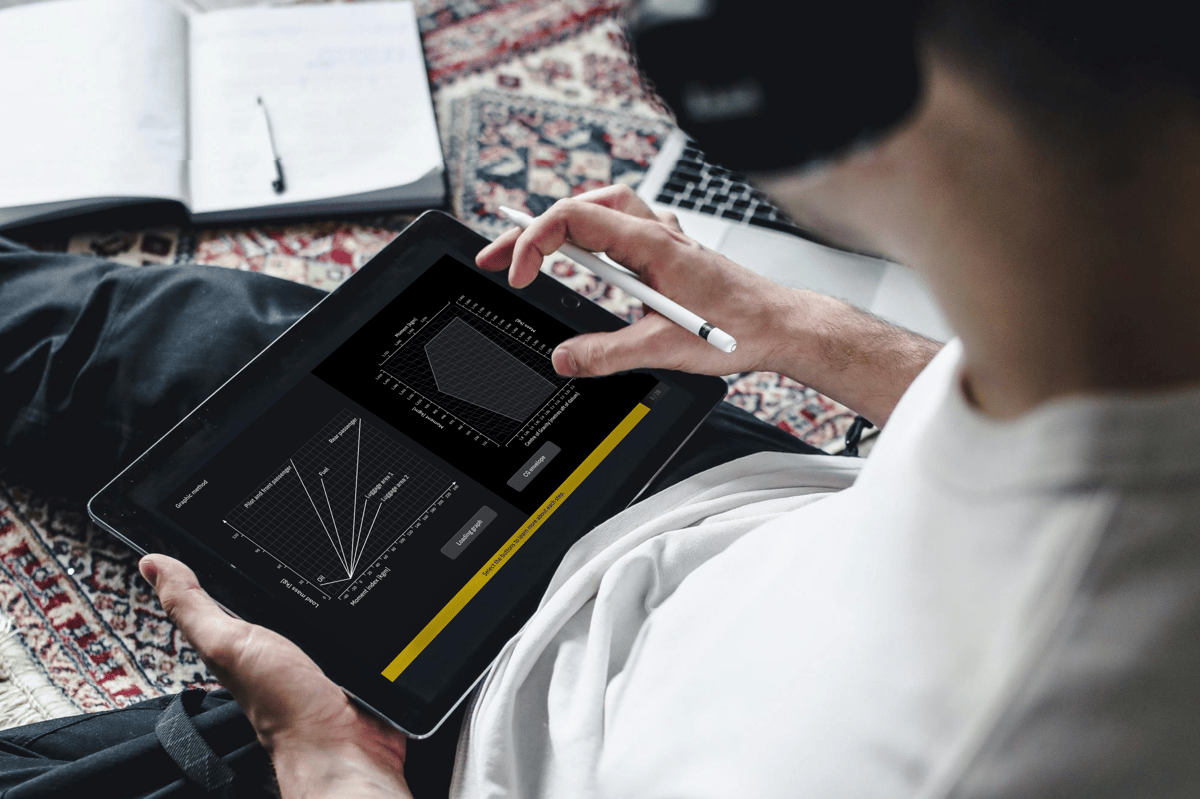
Classroom-bound theory → Structured learning anywhere
In this article, we’ll explore why online ATPL and PPL theory courses are becoming a preferred choice for both students and flight schools, what sets modern distance learning apart, and how this approach delivers measurable benefits in flexibility, efficiency, and the ability to train more students without adding extra classrooms or instructors. We’ll also share real-world examples of learners and schools that have embraced this shift and some numbers that help put modern distance learning into perspective.
What Makes Modern Distance Learning Different?
Let’s take a trip down memory lane. Do you remember the days of static PDFs, printed manuals, and PowerPoint slides quickly thrown together for online use? (Apologies to those who are still living them!) What about the instructor wrestling with a projector, only to beam the slides onto the ceiling? Thankfully, for most, those days are now a far cry from what modern e-learning for pilot theory offers.
Today, the instructor can focus on teaching, not troubleshooting, and the learner receives structured, interactive, syllabus-aligned courses that work online and offline. Whether at home, in a café, or on a train, the learning fits around the learner, not the other way around. This is what modern distance learning flight training looks like, designed for flexibility and convenience.


It’s also worth addressing the two questions that come up almost every time distance learning is mentioned. First: “Does distance learning mean learners are left on their own?” Not in a modern setup. Self-paced study can be paired with instructor visibility, structured plans, scheduled touchpoints, and clear checkpoints that keep progress on track. Second: “Can standards and compliance be maintained?” Again, yes, when the syllabus, records, and oversight are built into the platform rather than relying on spreadsheets, email threads, and printed sign-offs.
For flight schools, the benefits go far beyond convenience. Modern platforms reduce administrative overhead, reduce reliance on classroom allocation, and make it easier to train more students without increasing instructor workload. And while traditional methods often rely on fragmented records and inconsistent teaching, modern solutions support standardization, accurate progress tracking, and audit-ready reporting, without adding complexity.
Another major advantage is detailed analytics. A modern LMS doesn’t just show overall scores; it pinpoints weak areas by topic, so instructors can intervene early and prevent small gaps from turning into exam failures or costly resits.
| Old Approach | Modern Approach |
| PDFs, printed manuals, and PowerPoint slides with no engagement or tracking | Interactive, syllabus-aligned modules with structured objectives |
| Fixed schedules and limited flexibility |
Accessible online and offline through a dedicated app |
| Fragmented records and inconsistent teaching methods | Clear progress tracking and consistent delivery across cohorts |
Why Learners Choose Modern Distance Learning
For aspiring pilots, time is precious. Traditional classroom-based theory training often means rearranging work schedules, commuting long distances, and sitting through fixed sessions that don’t always match personal learning pace. Add to that the frustration of lugging heavy manuals and relying on printed notes and it’s easy to see why many learners are turning to distance learning flight training.
Modern e-learning changes the equation. With online and offline access, learners can study anywhere, anytime, whether at home, in a café, or during a train ride. The course fits around the learner, not the other way around. And because the content is structured and syllabus-aligned, students know they’re preparing for exams with the right material, presented in a way that’s clear and easy to navigate.
Just as importantly, modern distance learning doesn’t have to mean “studying alone.” Many programmes combine self-paced modules with live online sessions, instructor support, and structured study targets, so learners keep the flexibility while still benefiting from guidance and accountability.
Key Benefits for Learners


Offline access via app:
Continue learning even without an internet connection

Clear progress tracking:

Engagement that matters:
Case in Point: Why do Students Choose Distance Learning?
That’s enough from us, for now, time to hear from some students to see why they have chosen distance learning:
 1) Lukas M., Munich
I work shifts at the airport and couldn’t attend evening classes. With offline access, I studied ATPL theory during my commute and joined live sessions after work. When I struggled with Mass & Balance, my instructor saw it in the system and provided extra support. Thanks to the flexibility and quality of modern distance learning, I passed all my exams on the first attempt.
 2) Sophie K., Hamburg
Before, I had to drive a 90-minute round trip for classroom lessons. Now, I can learn at home or on the train. The structured modules and progress tracking keep me focused, and the weekly virtual classroom gives me the interaction I need. It’s the best of both worlds.
 3) Daniel S., Bad Hersfeld
The biggest difference? Knowing exactly where I stand. The system showed my progress by topic, so I never feel lost. When Radio Navigation dipped below the target I’d been given, I got in touch with my instructor who helped me out. Seeing that progress screen turn green was a huge confidence boost.
Why Flight Schools Adopt Modern Distance Learning
For flight schools, theory training has traditionally meant allocating classrooms for mandatory sessions, managing printed materials, and ensuring instructors deliver consistent lessons across multiple cohorts. These demands often lead to inefficiencies, fragmented records, inconsistent teaching methods, and limited visibility into learner progress. In a sector where compliance and quality matter, these gaps can create real challenges.
Modern distance learning solves many of these problems while raising the standard of training. By moving theory into a structured, interactive format that works online and offline, schools can reduce administrative overhead, free up instructor time, and train more students without expanding physical facilities. But the real advantage lies in the quality and control of the learning experience.
When the content is consistent and the progress data is visible, instructors can intervene earlier, target weak areas faster, and spend their time where it has the most impact.
What Quality Distance Learning Looks Like
-
Bringing pilot theory to life:
Complex concepts explained through clear visuals, animations, and real-world examples -
Making the complex simple:
Structured modules that break down technical topics into digestible steps -
Immersive and interactive:
Learners engage with scenarios, questions, and dynamic content, not static PDFs or endless slides -
Consistency across operations:
Every learner follows the same syllabus structure, supporting standardization across bases and cohorts -
Reliable record-keeping and progress tracking:
No more lost forms or manual spreadsheets, performance data is accurate, accessible, and audit-ready
For flight schools, this isn’t just about convenience, it’s about delivering a better product. When learners are engaged and instructors have clear oversight, outcomes improve. And when training is consistent and reporting is straightforward, schools can focus on what matters most: preparing safe, competent pilots.
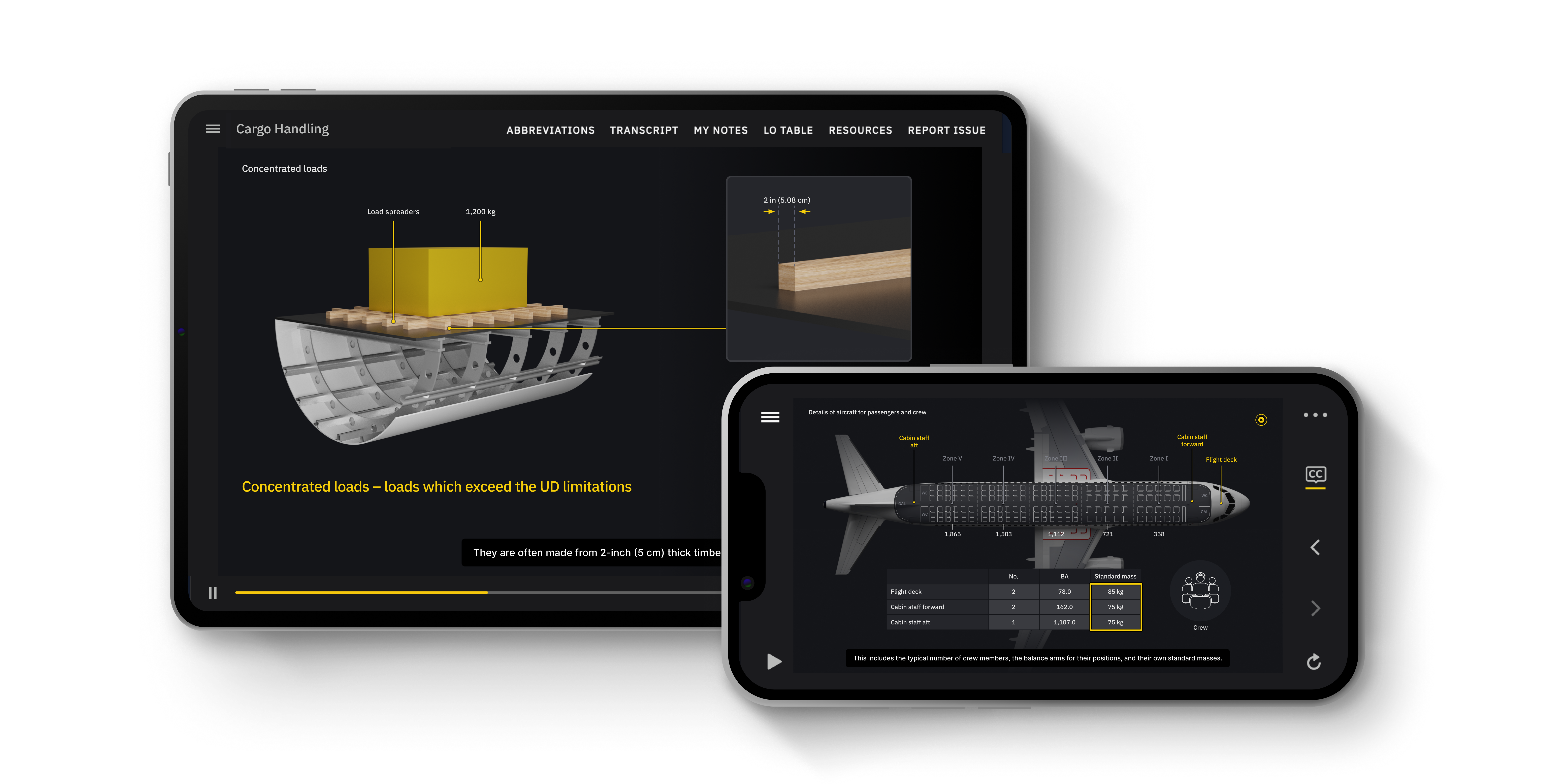
Evionica’s immersive ATPL(A) distance learning course
What Flight Schools Should Look For in a Modern Distance Learning Setup
- Syllabus control and consistency: structured modules with clear objectives and reliable versioning
- Instructor dashboards: visibility by topic, trend, and learner
- Assessment support: question banks, progress checks, etc.
- Audit-ready records: completion logs, reporting, and evidence that’s easy to compile and review
- Online and Offline reliability: learning that continues with or without internet
- Data protection and access control: role-based access, secure record retention, and GDPR-aligned handling
- Detailed analytics: identify weak areas by topic, so instructors can step in early and keep learners on track
Distance Learning in Numbers

 Up to ~40–50% cost savings: Distance learning cuts direct costs by reducing travel, facilities, and printed materials. In a comparison of virtual vs in-person professional training, the virtual format delivered similar or better outcomes with a 44% lower per-person cost.
  Knowledge retention improves by 25–60%: Interactive and self-paced learning boosts retention compared to lecture-based training. It also improves learner satisfaction and completion rates. This uplift is strongly linked to interactivity, feedback, and structured practice, all features of a modern distance learning course
  Consistent compliance: 100% EASA-aligned syllabus supports standardization across cohorts and across operations. More importantly, it keeps evidence in one place, progress, completions, and instructor oversight, so audits stop becoming a “manual hunt” across folders, spreadsheets, and email threads. And that leads to this...
80% reduction in admin: When progress tracking, reminders, and reporting are automated, organizations commonly report major reductions in admin time. Published case studies show admin effort can drop by as much as 80% after moving from manual processes to automated training management
 Scalable growth: Train more students without adding classrooms or increasing instructor workload. For theory courses, 1 instructor can oversee 3–5x more learners when content delivery is standardized and instructor time shifts from repeating the same lesson to monitoring progress and supporting those who need intervention.
NB: The figures above reflect commonly cited e-learning benchmarks and published comparisons; actual results depend on course design and delivery model.
Conclusion
Modern distance learning isn’t just about changing how theory training is delivered; it represents a major leap in quality, efficiency, and accessibility. For learners, it means flexibility, confidence, and engaging content that brings complex theory to life. For flight schools, it means streamlined operations, consistent training delivery, improved oversight, efficient management of learner progress, and the ability to scale without sacrificing standards. Modern distance learning doesn’t remove instructors; it gives them a clearer view of learner progress and ensures support at the right time.
The question isn’t whether distance learning works, it’s whether the approach is truly modern. Are learners receiving structured, interactive content that fits real life? Are instructors equipped to monitor progress and maintain consistency across every cohort? If the answer is “yes” to both, distance learning stops being a compromise and becomes a competitive advantage.
